Monday, April 14, 2014

15 Plants And Herbs That Can Boost Lung Health, Heal Respiratory Infections And Even Repair Pulmonary Damage


Jan 22, 2014 by JOHN SUMMERLY

 John Summerly is nutritionist, herbologist, and homeopathic practitioner. He is a leader in the natural health community and consults athletes, executives and most of all parents of children on the benefits of complementary therapies for health and prevention.

    
A wave of viral and bacterial infections is sweeping across the Northern Hemisphere and people are taking longer to heal from an array of symptoms within the respiratory system. If you are resorting to conventional medicine to address these infections with antibiotics, you are not only adding to the problems associated with antibiotic resistance, but you're also doing little to address the healing mechanisms within your body to address the cause. Herbal remedies not only boost lung health, but they can heal infections and even repair lung damage. Here are 15 of the best herbs to boost lung health.


1. LICORICE ROOT
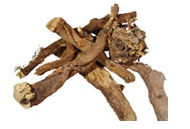

 
Licorice is one of the more widely consumed herbs in the world. In Traditional Chinese Medicine it occurs in more formulas than any other single herb because it is thought to harmonize the action of all other herbs. Licorice is very soothing and softens the mucous membranes of the throat and especially the lungs and stomach and at the same time cleanses any inflamed mucous membrane that needs immune system support. . It reduces the irritation in the throat and yet has an expectorant action. It is the saponins (detergent-like action) that loosen the phlegm in the respiratory tract, so that the body can expel the mucus. Compounds within this root help relieve bronchial spasms and block the free radical cells that produce the inflammation and tightening of the air ways. The compounds also have antibacterial and antiviral effects to them as well which helps fight off viral and bacterial strains in the body that can cause lung infections. Glycrrhizins and flavonoids can even help prevent lung cancer cells from forming which means they can even prevent lung cancer.


2. COLTSFOOT
 

Coltsfoot has been traditionally by Native Americans for thousands of years to strengthen the lungs. It clears out excess mucus from the lungs and bronchial tubes. It soothes the mucus membranes in the lungs, and has been shown in research to assist with asthma, coughs, bronchitis, and other lung ailments. Coltsfoot is available in dried form for tea or as an alcohol extract known as a tincture.
3. CANNABIS


The toxic breakdown of therapeutic compounds in cannabis from burning the plant are totally avoided with vaporization. Extraction and inhaling cannabinoid essential oils of the unprocessed plant affords significant mitigation of irritation to the oral cavity that comes from smoking. Cannabis is perhaps one of the most effective anti-cancer plants in the world shown in study after study to stimulate cannabinoid receptor activation in specific genes and mediate the anti-invasive effect of cannabinoids. Vaporizing cannabis allows the active ingredients to stimulate the body's natural immune response and significantly reduces the ability of infections to spread. Vaporizing cannabis (especially with very high amounts of cannabinoids) opens up airways and sinuses, acting as a bronchodilator. It is even a proven method to treat and reverse asthma.
4. OSHA ROOT


Osha is an herb native to the Rocky Mountain area and has historically been used by the Native Americans for respiratory support. The roots of the plant contain camphor and other compounds which make it one of the best lung-support herbs in America. One of the main benefits of osha root is that it helps increase circulation to the lungs, which makes it easier to take deep breaths. Also, when seasonal sensitivities flare up your sinuses, osha root which is not an actual antihistamine, does produce a similar effect and may be help calm respiratory irritation.


5. THYME


Thyme is very powerful in the fight against chest congestion. It produces powerful antiseptic essential oils, which are classified as naturally antibiotic and anti-fungal. Thyme is a well known to zap acne than expensive prescription creams, gels and lotions. Thyme tea has the power to chase away and eliminate bacteria and viruses so whether your infection is based on either, it will work. Thyme has been used as a lung remedy consumed since antiquity and is used extensively to day to prevent and treat respiratory tract infections and bacterial infection pneumonia.

6. OREGANO
 

Although oregano contains the vitamins and nutrients required by the immune system, its primary benefits are owed to its carvacrol and rosmarinic acid content. Both compounds are natural decongestants and histamine reducers that have direct, positive benefits on the respiratory tract and nasal passage airflow. Oil of oregano fights off the dangerous bacteria Staphylococcus aureus, better than the most common antibiotic treatments. Oregano has so many health benefits that a bottle of organic oregano oil should be in everyone's medicine cabinet.


7. LOBELIA
 
 Did you know that horses given lobelia are able to breath more deeply? Its benefits are not limited to equestrians. It has been used as "asthmador" in Appalachian folk medicine. Lobelia, by some accounts, is thought to be one of the most valuable herbal remedies in existence. Extracts of Lobelia inflata contain lobeline, which showed positive effects in the treatment of multidrug-resistant tumor cells. Lobelia contains an alkaloid known as lobeline, which thins mucus, breaks up congestion. Additionally, lobelia stimulates the adrenal glands to release epinephrine, in effect, this relaxes the airways and allows for easier breathing. Also, because lobelia helps to relax smooth muscles, it is included in many cough and cold remedies. Lobelia should be part of everyone's respiratory support protocol!
8. ELECAMPANE


Elecampane has been used by Native Americans for many years to clear out excess mucus that impairs lung function. It is known as a natural antibacterial agent for the lungs, helping to lessen infection particularly for people who are prone to lung infections like bronchitis. Herbal practitioners often recommend one teaspoon of the herb per cup of boiling water, drunk three times daily for two to three weeks but elecampane is also available in tincture format for ease.


9. EUCALYPTUS


Native to Australia, eucalyptus isn't just for Koala bears! Aborigines, Germans, and Americans have all used the refreshing aroma of eucalyptus to promote respiratory health and soothe throat irritation. Eucalyptus is a common ingredient in cough lozenges and syrups and its effectiveness is due to a compound called cineole. Cineole has numerous benefits -- it's an expectorant, can ease a cough, fights congestion, and soothes irritated sinus passages. As an added bonus, because eucalyptus contains antioxidants, it supports the immune system during a cold or other illness.
10. MULLEIN


 Both the flowers and the leaves of the mullein plant are used to make an herbal extract that helps strengthen the lungs. Mullein is used by herbal practitioners to clear excess mucus from the lungs, cleanse the bronchial tubes, and reduce inflammation that is present in the respiratory tract. A tea can be made from one teaspoon of the dried herb to one cup of boiled water. Alternatively, you can take a tincture form of this herb.


11. LUNGWORT 


 Lungwort is a tree-growing lichen that actually resembles lung tissue in appearance. However, this natural remedy doesn't just look the part. As early as the 1600s, lungwort has been used to promote lung and respiratory health and clear congestion. Pulmonaria selections come in all kinds so seek an herbologist for direction. Lungwort also contains compounds that are powerfully effective against harmful organisms that affect respiratory health. 


12. CHAPARRAL
 Chaparral, a plant native to the southwest, has been appreciated by the Native Americans for lung detoxification and respiratory support. Chaparral contains powerful antioxidants that resist irritation and NDGA which is known to fight histamine response. NDGA inhibits aerobic and anaerobic glycolysis (the energy-producing ability) of cancer cells. Chaparral is also an herb that fights harmful organisms. The benefits of chaparral are most available in a tincture extraction but chaparral tea may support respiratory problems by encouraging an expectorant action to clear airways of mucus.


13. SAGE


Sage's textured leaves give off a heady aroma, which arises from sage's essential oils. These oils are the source of the many benefits of sage tea for lung problems and common respiratory ailments. Sage tea is a traditional treatment for sore throats and coughs. The rich aromatic properties arising from sage's volatile oils of thujone, camphor, terpene and salvene can be put to use by inhaling sage tea's vapors to dispel lung disorders and sinusitis. Alternatively, brew a strong pot of sage tea and place it into a bowl or a vaporizer.

14. PEPPERMINT

 Peppermint, and peppermint oil, contains menthol -- a soothing ingredient known to relax the smooth muscles of the respiratory tract and promote free breathing. Dried peppermint typically contains menthol, menthone, menthyl acetate, menthofuran and cineol. Peppermint oil also contains small amounts of many additional compounds including limonene, pulegone, caryophyllene and pinene. Paired with the antihistamine effect of peppermint, menthol is a fantastic decongestant. Many people use therapeutic chest balms and other inhalants that contain menthol to help break up congestion. Additionally, peppermint is an antioxidant and fights harmful organisms.


15. PLANTAIN LEAF


With fruit that is similar in appearance to a banana, plantain leaf has been used for hundreds of years to ease cough and soothe irritated mucous membranes. Many of its active constituents show antibacterial and antimicrobial properties, as well as being anti-inflammatory and antitoxic. Clinical trials have found it favorable against cough, cold, and lung irritation. Plantain leaf has an added bonus in that it may help relieve a dry cough by spawning mucus production in the lungs.


      Seek the advice of an herbologist or Naturopathic Doctor on the preparation, appropriate dosages and frequency according to your condition. Many of the herbs above may also be combined for cumulative effects. All of the above are available in various forms, as nutritional supplements, tea blends and prepared oils. You can always grow your own as well to ensure your herbs are organic and ethically harvested.

Tuesday, April 8, 2014

Gardening with Epsom Salt


Gardening with Epsom Salt

Seedling and garden spade tool
Epsom salt is a popular and well-reputed supplement in organic gardening. With the recent push towards “green” living, Epsom salt is an ideal answer to a variety of organic gardening needs. Both cost effective and gentle on your greenery, Epsom salt is an affordable and green treatment for your well-tended plants—both indoors and out.

Completely one-of-a-kind with a chemical structure unlike any other, Epsom salt (or Magnesium Sulfate) is one of the most economic and versatile salt-like substances in the world. Throughout time, Epsom salt has been known as a wonderful garden supplement, helping to create lush grass, full roses, and healthy, vibrant greenery. It has long been considered a planter’s “secret” ingredient to a lovely, lush garden, and is such a simple, affordable way to have a dramatic impact. Just as gourmet salt works with the ingredients in food to enhance and bring a meal to its full potential, Epsom salt enhances fertilizer and soil’s capabilities to bring a deeper level of vitality to your garden’s composition. Epson Salt is celebrated for its powerful benefits on natural life, ranging from household plants to shrubs, lawns and even trees.

Table of Contents:


Why Epsom Salt Works in the Garden

Composed almost exclusively of Magnesium Sulfate, Epsom salt is intensely rich in these two minerals that are both crucial to healthy plant life. These same minerals which are so beneficial for bathing and using around the house are also a wonderful facilitator to your garden, helping it reach its fullest potential and creating a lush and vibrant outdoor space. Unlike common fertilizers, Epsom Salt does not build up in the soil over time, so it is very safe to use.

Magnesium

Magnesium is beneficial to plants from the beginning of their life, right when the seed begins to develop. It assists with the process of seed germination; infusing the seed with this important mineral and helping to strengthen the plant cell walls, so that the plant can receive essential nutrients. Magnesium also plays a crucial role in photosynthesis by assisting with the creation of chlorophyll, used by plants to convert sunlight into food. In addition, it is a wonderful help in allowing the plant to soak up phosphorus and nitrogen, which serve as vital fertilizer components for the soil. Magnesium is believed to bring more flowers and fruit to your garden, increasing the bounty as well as the beauty of your space.

Sulfate

Sulfate, a mineral form of sulfur found in nature, is an equally important nutrient for plant life. Sulfate is essential to the health and longevity of plants, and aides in the production of chlorophyll. It joins with the soil to make key nutrients more effective for plants, including nitrogen, phosphorus and potassium. Sulfate works in conjunction with Magnesium to create a “vitamin” full of minerals, nourishment and health benefits for your garden.

How to Use Epsom Salt in the Garden


Epsom Salt for Houseplants

Tomato plant and garden tools
Perhaps the most natural and easiest place to start with Epson Salt is with the potted plants that are dispersed around your house and porch. Epsom salt is such a simple way to increase their blooming and health, and is something that you can include easily as a part of a normal routine. For potted plants, simply dissolve 2 tablespoons per gallon of water, and substitute this solution for normal watering at least once a month – although it is safe to do this as often as desired.
Adding this Epsom salt solution to houseplants that have been potted for a long time is especially useful, due in part to natural salt, which can build up in the soil and clog the root cells of the plant. Epson Salt can help to clear up this accumulation of natural salts in the pot, and lead to a revival in the plant's health and vibrancy. It is also useful for a plant that has just been potted, as it will more easily receive the proper nutrients and have a healthy start in life. As general guidance, most plants need plenty of sun to receive the benefits of Epsom Salt (and photosynthesize), so be sure to keep typical houseplants in a sunny area of the home unless instructed otherwise. Using  Epsom Salt with potted vegetable plants is a really wonderful idea as well, because it can increase the amount of fruit or vegetables you receive from the one plant. This is particularly beneficial to apartment dwellers and those with little or no personal yard space, as Epsom Salt can help you receive a large bounty within a confined space. A wonderful way to easily and effectively grow food!
Gardener planting a seedling

First Planting with Epsom Salt

For setting up your garden and the initial planting stage, Ultra Epsom Salt is especially useful for getting a nourishing start. Prep your garden soil by sprinkling up to 1 cup of Epsom Salt per 100 square feet, and then work it into the soil before seeding or planting.This helps the seeds to germinate better, and start with a strong and healthy growth. It is also very beneficial for more mature plants that you are going to add to your garden, since the transition can be difficult for their growth and health.


Vegetable Gardens & Epsom Salt

For maintaining and creating a vegetable garden, Epsom salt can help you refresh and revitalize the garden you have already created—or create a healthy beginning to a new space. Epsom Salt is advised for use with all fruits, vegetables, and herbs (It is not advisable to use Epsom salt with the planting of sage—it is not beneficial for this particular plant). As previously mentioned, it does not cause build-up or any harm to plants when used, and so can be used safely and effectively during any stage of the plant’s life. For general purposes, Epson Salt works well as a saline solution for a tank sprayer. Simply fill your tank sprayer (commonly available at gardening and home improvement stores) with 1 tablespoon of Epsom Salt per gallon of water. Then spray your garden after the initial planting, later when it begins to grow (or after a month or so for transplants), and lastly when the vegetables begin to mature. It is believed that this practice will give you healthier vegetables, and a lush vegetable garden.
The advice above is wonderful for any vegetable or herb, but we do have additional advice for some varieties and situations:
Tomato plant

Tomatoes & Epsom Salt

Tomatoes are prone to magnesium deficiency later in the growing season, and display this through yellow leaves and less production. They can greatly benefit from Epsom Salt treatments both at the beginning of their planting and throughout their seasonal life. When gardening, simply add one or two tablespoons per hole before planting the seeds or transplants. Then as the tomato matures, either work in one tablespoon of Epsom Salt per foot of plant height around the base of the tomato plant (individually), or create the tank sprayer solution mentioned above and use that every two weeks.

Pepper plant

Peppers & Epsom Salt

Like tomatoes, peppers are also prone to magnesium deficiency and thrive much more fully with the use of Epsom salt. This can be done in the same way as tomatoes—through adding one or two tablespoons per hole before planting (for seeds and grown plants), and then twice a week based on the height of the plant (see above). A study conducted by the National Gardening Association discovered that four out of six home gardeners noticed that their Epsom salt-treated peppers were larger than those that were un-treated. Many gardeners credit their healthy, vibrant peppers and tomatoes to Epsom salt. This solution truly aides in the production level, aesthetic beauty and quality of the harvest produced.


Flower Gardens & Epsom Salt

Gardener trimming a rose bush
Like vegetable gardens, flower gardens also blossom more vibrantly and beautifully with the use of Epson Salt in the soil and as a liquid solution. Epsom salt helps your garden to become the calming, serene environment you have been envisioning, and will increase the beauty of your home and landscape as well. To use, follow the guidelines outlined in the First Planting section for both brand new seedlings and more mature plants. Next, using a tank sprayer, fill with a liquid solution containing one tablespoon of Epsom Salt per gallon of water. This solution can be used as much as desired during the gardening season; but definitely after the initial planting, then later when you see growth (or after a month or so for transplants), and finally when they have received full bloom. If you don’t have a tank sprayer, you can always create this solution in a watering can using the ratio of 1 tablespoon Epsom Salt to 1 gallon of water.
Roses and flower bushes have some additional tips concerning the use of Epsom salt:

Roses & Epsom Salt

Roses in particular can greatly benefit from Epsom salt, and it is said to make foliage greener, healthier and lead to more canes and roses. Start by soaking unplanted rose bushes in one half cup of Epsom Salt per gallon of water before planting, to help the roots get stronger and firmer. Then, when planting, add one tablespoon of Epsom Salt per hole before inserting the rose bush. After the roses are planted (and to boost already planted roses), make the liquid Epsom Salt solution listed above for either a tank sprayer or watering can, or simply work in one tablespoon of Epsom Salt per foot of plant (individually). Once during the beginning of the season, it is also advised to work one half cup of Epsom Salt into the base of the plant to encourage blooming canes and healthy basal cane development.

Shrubs & Epsom Salt

For flowering and green shrubs, particularly evergreens, azaleas and rhododendrons, Epsom salt can improve the blooming of the flowers and the vibrancy of the greenery. Simply work in one tablespoon of Epsom Salt per nine square feet of bush into the soil, over the root zone, which allows the shrubs to absorb the nutritional benefits. Repeat this every two to four weeks for optimal results.

Lawn

Lawn Care & Epsom Salt

Just as Epson Salt can revitalize your garden, so does it improve the greenery and sustainability of your lawn. Epsom salt is particularly useful for preventing a yellowing lawn and creating a lush, softer, deeply green grass. It can be applied using a tank sprayer (which can also be used on your flower and vegetable gardens), a lawn spreader, and by using a hose and spray attachment. Use three pounds per 1250 square feet (25’ x 50’), six pounds per 2500 square feet (50’ x 50’), and twelve pounds per 5000 square feet (50’ x 100’). If using a tank sprayer or a hose and spray attachment, make sure to dilute the salt in plenty of water (enough to make it dissolve), so that it is a concentrated solution.

Tree in a garden

Trees & Epsom Salt

Trees, the largest and longest standing part of your garden, can also benefit from Epsom salt by allowing more minerals to be absorbed through the roots, giving you strong healthy trees to enjoy for years to come. If your trees bloom or produce fruit, Epson Salt can be particularly useful due to its ability to increase the production of both flowers and bounty. Simply work in two tablespoons per nine square feet into the soil over the root zone three or four times a year. Planning to complete this at the beginning of each season is particularly helpful for preparing the tree for the change in weather, and allowing them to become stronger and healthier.


Sunday, April 6, 2014

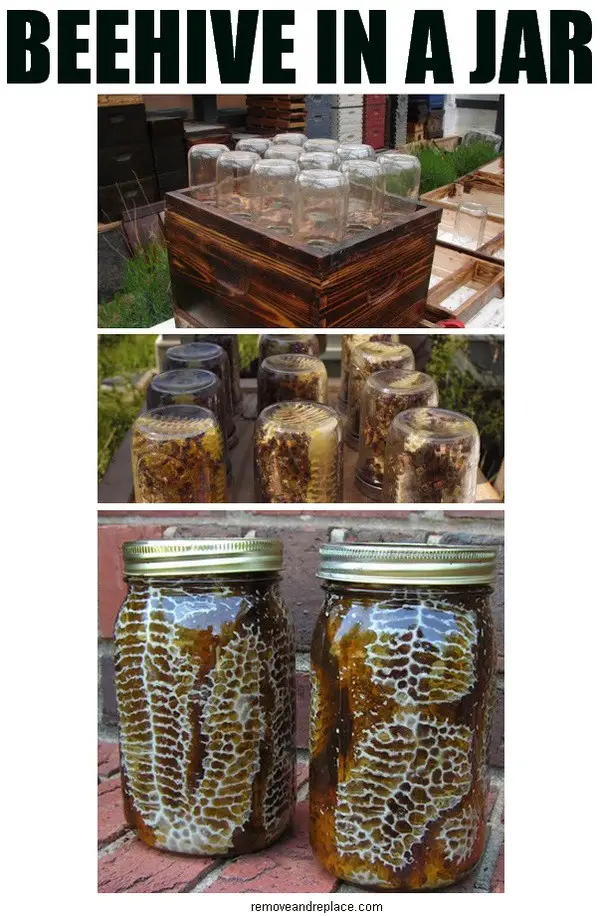
Beehive In a jar


Interested in making a beehive in a jar? It is actually a very simple and easy process with the right tools. Everything you need is listed below including pictures.


Materials Needed TO Make Your Own Backyard Beehive In A Jar:
1 – Piece of 2″ x 12″ x 6′ wood (cut 2 pieces for the sides to 22″)
1 – Piece of 2″ x 12″ x 6′ wood (cut 2 pieces for the front and back to 18″)
1 – Piece of 1″ x 1″ x 6′ wood (cut 2 pieces for the top frame left and right sides to 22″)
1 – Piece of 1″ x 1″ x 6′ wood (cut 2 pieces for the top frame front and back to 18″)
1 – Piece of thick plywood (cut to 16″ X 20″)
1 – Bottom beehive kit (for the bees to enter and exit)
12 – Big mouth quart sized jars (for honeycomb)
1 – Box of wood screws (size 1″ screws)
1 – Can of wood stain (use a dark wood stain of your choice)
And of course, you need bees, most bees are available only in March and April but you can try these links to order your honey bees online – 3lbs of honey bees – Queen Bees For Sale – Queen & Package Bees
beehive in a jarhow to easily make a beehive in a jar diy_5First get a piece of thick plywood and cut to 16″ x 20″.
Then measure and center for 12 holes and drill the pilot holes.
Next, drill 12 – 3 1/2″ holes with a hole saw (for the jars to fit into).
how to easily make a beehive in a jar diy_1Next cut 2 – 22″ pieces from a 2″ x 12″ x 6′ board and 2 – 18″ pieces from a 2″ x 12″ x 6′ board.
Then screw everything together and stain the wood with dark wood stain (or whatever you choose).
how to easily make a beehive in a jar diy_2Get your 12 wide mouth mason 1/2 gallon size jars (or a normal quart sized jar).
Then arrange them and make sure they all fit properly over the holes.
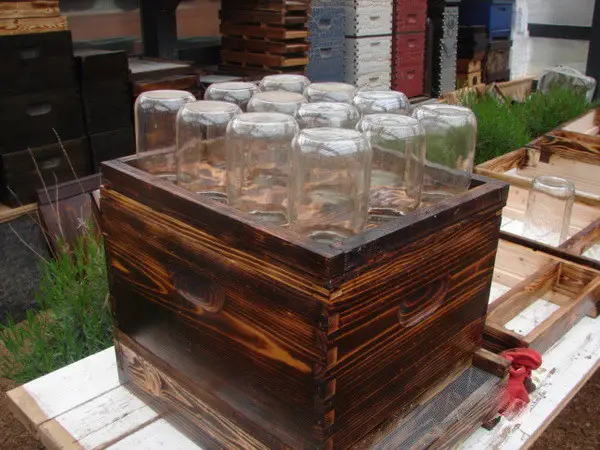
how to easily make a beehive in a jar diy_6Here is the 12 beehive jars arranged and installed in our backyard beehive.
The jars sit with the screw lid on for less than 1/16″ gap between the jar and the beehive hole.
You may need to add some shims to support the weight so it won’t sag with the weight of the honey.
how to easily make a beehive in a jar diy_4Another view of our DIY backyard beehives in a jar project.
You can vent and screen this chamber if there is excess heat or put the beehive where it gets late day shade.
The bottom wooden piece we purchased as a kit and this is where the bees enter and exit the beehive.
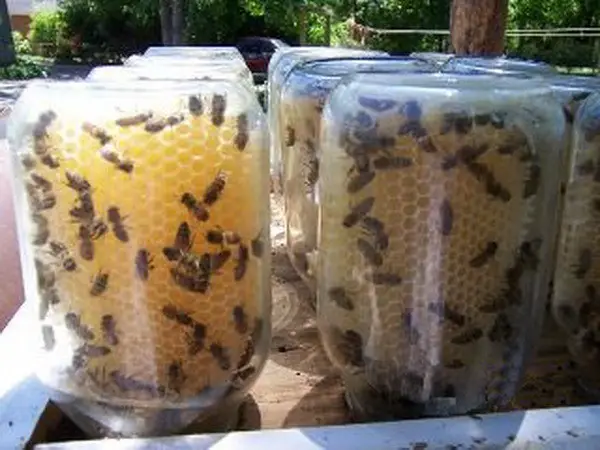
how to easily make a beehive in a jar diy_7The bees are seen here after we added them to the jars, they are now ready to make organic honey.
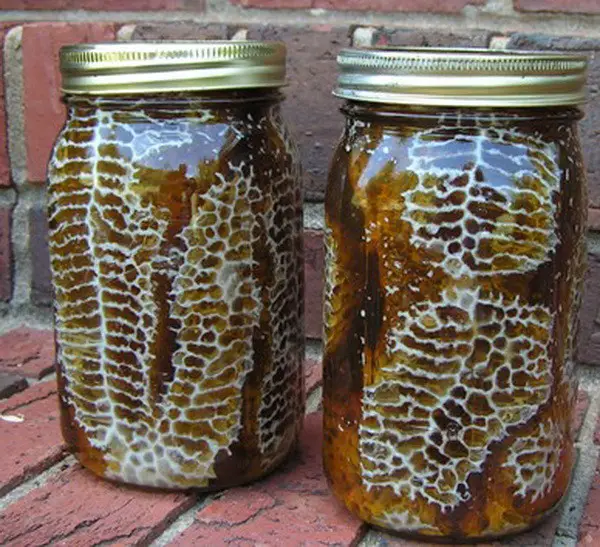
how to easily make a beehive in a jar diy_3After much time, here is what the honeycomb jars look like filled with honey.

Other People Are Reading These DIY Articles:

Farm-to-Consumer Legal Defense Fund


     I mentioned this Legal Defense group in class the other day, and even though it is a 501 (c)(4) non-profit organization it is helping many farmers prevail against big corporate farmers and unfair/unconstitutional governmental laws that have been thwarting small farmers right to the pursuit of happiness via organic farming including small milking operations.  They work pretty much pro bono and are supported primarily by membership... check it out!

***
 
Become a Member  |  Donate  |  Renew  |  Shop for Activist Wares  |  Join Our Mailing List

Join by midnight March 28 and choose a gift!
Item1Farm Bill Victories Worth Celebrating 
Agricultural Act of 2014 Now Public Law             
      
It's official, the Agricultural Act of 2014 (a.k.a. the Farm Bill - HR 2642; now Public Law 113-79) was signed into law on February 7, 2014 after more than two years of congressional debate.  

Not surprisingly, the bulk of the Farm Bill continues the same programs that favor large-scale, chemical-intensive, mono-cropping and commodity agriculture; however, there is also some good news.

There are gains on these specific issues raised in various action alerts sent by the Farm-to-Consumer Legal Defense Fund and other groups...more 
 
Item2Precedent Setting Agriculture Bill Signed by Governor Terry McAuliffe!
Press Release 
 
"Boneta Bill" Cuts Regulations, Frees Family Farms Up to Prosper
    
Falls Church, VA - (March 10, 2014 - Globe Newswire)Virginia Senate Bill 51 (SB51), a landmark bill creating more economic opportunities and decreasing regulations for Virginia's family farms was signed last Thursday by Governor Terry McAuliffe. The new law takes effect July 1, 2014.
  
The law will increase consumer access to locally produced food as well as giving farmers new markets and a...more 
Item3Join Us in Sowing Seeds of Food Freedom & Choose Your Gift! 
1st Annual Membership Drive!    
  
 
"We sell organic lettuce and 
without the kind and generous 
help of FTCLDF, we would have literally been sprayed out of 
business by a neighbor." 

Randy & Lee Hoovey 
Let Us Farm 
 
Together we stand.
     
The Farm-to-Consumer Legal Defense Fund is doing what individuals can't do or finance alone, like:
            • Paying for expensive litigation to save small farms and their communities
            • Having attorneys answer "farmer 911" phone calls in the wee hours of the morning
            • Suing the FDA and USDA over unfair small farm regulations
Join a healthy, active, thriving food freedom community  
that is focused on setting our out-of-whack food system straight.  
Sow the seeds of food freedom now for our health and for the  
health of generations to come!
   
What are other FTCLDF members saying about their priceless memberships?


Authors Jere & Emilee Gettle run a farm, vegan restaurant and a seed store in Missouri
CHOOSE ONE OF SIX GREAT GIFTS


1. Polyface YOU Workshop with Joel Salatin, 3-DVD set
2. Cultured Food for Life by Donna Schwenk
3. The Ancestral Table cookbook by Russ Crandall 
4. Eat the Yolks by Liz Wolfe, NTP  
5. The Heirloom Life Gardener by Jere & Emilee Gettle
6. Paleo Ebook Bundle by Robb Wolf 

Join by midnight Friday, March 28, 2014 and receive
any 
one of six fabulous gifts.  
  
Note: Some gifts are available in limited quantities.  
Join now to get your first choice! 
       
For more info, visit  www.farmtoconsumer.org/member 

  
Keep Raw Milk Flowing
Farm-to-Consumer Legal Defense Fund, a 501(c)(4) nonprofit, defends the rights and broadens the freedoms of family farms and artisan food producers while protecting consumer access to raw milk and nutrient-dense foods. Learn more About Us or check out the FTCLDF 2012 Summary.

Membership benefits include the possibility of representation in court; the Fund typically pays for all court costs. The Fund is not an insurance company and cannot guarantee representation on all legal matters. Your membership fees and donations help to keep local food sources available and preserve family farms facing unjust enforcement actions.

NEW! Subscribe to Food Rights News RSS Feed. 

   Donate Now
             
To donate, call (703) 208-FARM (3276) or visit www.farmtoconsumer.org/donate.   

Donations to the Farm-to-Consumer Legal Defense Fund are always appreciated though not tax-deductible. Prefer to make a tax-deductible donation? Go to www.farmtoconsumer.org/PIL for information about "public interest litigation" (PIL).

Questions? Contact us by email at info@farmtoconsumer.org or call 703-208-FARM (3276).    
Web Addresses (urls) in this Edition
If you are unable to click on the titles to go to the website posting(s), you may either go to the top of this email to "Having trouble viewing this email? Click here" or copy the following web address (url) and paste it in your browser: 
   
Please forward this digest to others who are concerned about protecting locally-sourced nutrient dense foods and preserving sustainable small family farms as well as defending the rights to sell and to access the foods of one's choice from the source of one's choice.